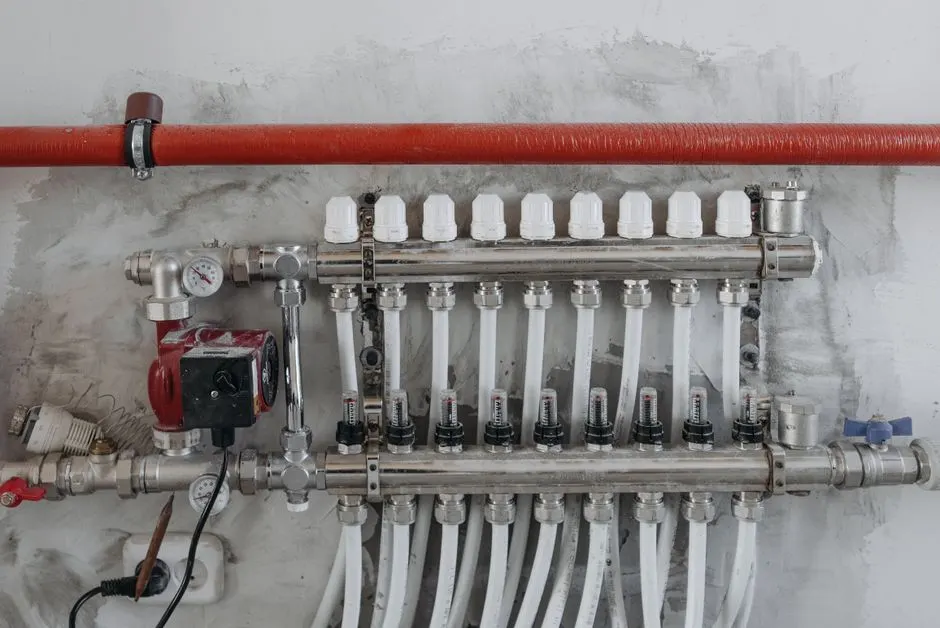
Connecticut winter storms cause frozen pipe water damage because the water inside a pipe expands when it turns to ice, and that expansion splits copper, PEX, or galvanized steel. The split itself is often silent - the flood starts hours later when the ice thaws and water pours out of the crack. That is why so many homeowners in Hartford, Waterbury, and Danbury wake up to a wet basement on the second or third day of a cold snap, not the first.
We have pumped out hundreds of these jobs across Connecticut, and the pattern is almost always the same: a pipe in an exterior wall or unheated crawl space freezes overnight, the homeowner turns on the tap the next morning and gets nothing, and by the afternoon there is water wicking up drywall and soaking insulation. This post breaks down exactly how that happens, where it happens first in Connecticut homes, what to do when it does, and what frozen pipe water removal costs in 2026.
How Connecticut winter storms cause frozen pipe water damage
How Connecticut winter storms cause frozen pipe water damage is a pressure problem, not just a cold problem. When water freezes inside a pipe, it expands about 9 percent in volume. If that ice forms between a closed faucet and the water main, the pressure has nowhere to go. It builds until the pipe wall fails - usually at a joint, a pinhole, or a thin spot in older copper.
The burst often happens while the ice is still in the pipe. The water stays frozen, so you see no leak. Then the storm passes, the outdoor temperature climbs above 32°F, the ice melts, and water sprays into the wall cavity or under the floor. By the time you notice a stain on the ceiling, the damage has been running for hours.
Connecticut makes this worse than many states for three reasons: our housing stock is old, our winters swing hard between freeze and thaw, and our storms often knock out power. A house that loses heat for 12 hours during a Nor'easter can drop below freezing inside the walls even if the thermostat is set to 68°F.
Why Connecticut pipes freeze so fast during a winter storm
Connecticut pipes freeze fast during a winter storm because the wind pulls heat out of exterior walls far quicker than still air does. A 20 mph wind at 10°F pulls the effective temperature on a north-facing wall down to roughly -9°F. Pipes running through that wall - especially in 1920s-era Hartford triple-deckers or post-war ranches in Bristol - have very little insulation between them and the outside.
Three conditions drive most of the frozen pipe calls we run:
- Sustained cold below 20°F for 6+ hours. One cold night rarely bursts a pipe. Three in a row does.
- Wind exposure. A storm that pushes 30 mph gusts against the north side of a house will freeze pipes that survived a still -5°F night.
- Heat loss. Power outages, a failed furnace, or a closed-off room drop interior wall temperatures below freezing even when the rest of the house is warm.
We also see a lot of this in older homes across Water Removal in West Hartford, where 100-year-old balloon-frame construction leaves pipe chases open to the attic and exterior walls. Those chases act like chimneys for cold air.
Where frozen pipes burst first in Connecticut homes
Frozen pipes burst first in Connecticut homes along exterior walls, in unheated crawl spaces, and in attics - the three places where a pipe has cold air on one side and no insulation on the other. After 15 winters of water removal work here, we can usually guess where the break is before we open a wall.
The top five locations, in order of how often we see them:
- Kitchen sink on an exterior wall. The supply line runs through the cabinet against the siding. Open the cabinet doors during a cold snap and you can cut your risk in half.
- Hose bibs and outdoor spigots. If the shut-off valve inside is not closed and drained before the first hard freeze, the pipe between the valve and the spigot splits.
- Crawl space supply lines. Common in ranches from Milford to Manchester. A single uninsulated line under the floor can freeze and dump 200+ gallons before anyone notices.
- Attic runs above the insulation. Plumbers sometimes route PEX through an attic to reach a second-floor bathroom. That pipe sees outdoor temperatures.
- Garage walls and unheated additions. Anywhere a pipe shares a wall with a space that is not heated.
If your home has a wet basement or a crawl space that already takes on water, a frozen pipe burst on top of that is a much bigger cleanup. We handle those as Basement Water Removal in Connecticut jobs because the water volume and the drying setup are different from a single-room leak.
What to do when pipes freeze in Connecticut winter
When pipes freeze in Connecticut winter, the first move is to shut off the main water valve and open the nearest faucet. That does two things: it relieves pressure in the line so the ice has room to expand without splitting the pipe, and it gives melting water somewhere to go besides your floor.
Here is the order we walk homeowners through on the phone:
- Shut off the main. In most Connecticut homes it is in the basement near the front wall, or in a utility closet on a slab. If you cannot find it, call us - we can talk you through it.
- Open the faucet closest to the frozen section. Both hot and cold, if it is a mixer.
- Check for visible water. Look at the ceiling below the frozen pipe, the floor above it, and the baseboards. If anything is wet, you already have a burst and you need water removal, not just thawing.
- Warm the pipe slowly. A hair dryer on low, a space heater with the door closed, or towels soaked in hot water. Never use a torch or an open flame - we have seen two house fires in Connecticut started this way.
- Do not use a heat gun on PEX or PVC. It will deform the pipe and create a new leak.
If the pipe has already split, thawing it just releases the flood. That is when you call us for Frozen Pipe Water Removal in Connecticut - we thaw, extract, and dry in one visit so you are not paying two crews.
How much does frozen pipe water removal cost in Connecticut?
Frozen pipe water removal in Connecticut runs $1,200 to $4,500 for most residential jobs in 2026, with the average single-room burst landing around $2,100. The range is wide because the cost tracks three things: how much water escaped, how far it traveled, and whether we have to open walls to dry the cavity.
Typical 2026 pricing we see in this area:
- Small burst, contained to one room, under 50 gallons: $1,200-$1,800. Usually 1 day of extraction and 3 days of drying.
- Burst in a wall that soaked drywall and insulation: $2,000-$3,200. Includes flood cuts, insulation removal, and 4-5 days of drying.
- Burst that flooded a finished basement or traveled between floors: $3,500-$7,000+. Multiple rooms, ceiling removal, and 5-7 days of drying.
- Category 3 water (sewage backup mixed in): add 30-50 percent. All porous materials have to go.
Most homeowners insurance policies in Connecticut cover sudden frozen pipe bursts, but they usually will not cover a pipe that froze because the house was left unheated. We document everything - moisture readings, photos, and a drying log - so your adjuster has what they need.
Common mistakes we see after a Connecticut winter storm
The most common mistake after a Connecticut winter storm is waiting to see if the pipe thaws on its own. Every hour the water sits, it wicks further into drywall, insulation, and subfloor. Mold can start in 24 to 48 hours in a warm, wet wall cavity.
Other mistakes we see on almost every job:
- Running a shop vac and calling it done. A shop vac pulls surface water. It does nothing for the water inside the wall cavity or under the floor.
- Turning up the heat to 85°F to dry things out. That bakes the surface while the cavity stays wet. You get a dry-looking wall with mold behind it.
- Not shutting off the main. We have arrived at jobs where the homeowner thawed the pipe, water started spraying again, and they had no idea where the shut-off was.
- Skipping the moisture check on adjacent rooms. Water follows the path of least resistance. A burst on the second floor often shows up as a stain in the first-floor ceiling 10 feet away.
- Assuming the insurance adjuster will find everything. They will not. You need moisture mapping and photos before anything gets torn out.
If your storm damage includes a roof leak from ice dams - common after a Nor'easter - that is a different scope. We handle those as Roof Leak Water Removal in Connecticut because the water entry point and the drying plan are different from a burst supply line.
When to call a professional
Call a professional when the pipe has already burst, when water is visible in a ceiling or wall, or when the frozen section is inside a wall cavity you cannot reach. Those three situations are not DIY jobs - the water has already moved beyond where you can see it.
Our team at Ct Water Remover Pros handles frozen pipe water removal, thawing, extraction, and structural drying across Connecticut. We find the break, extract the standing water, set drying equipment, and monitor moisture daily until the cavity is dry - not just the surface. We give you a written scope and price before we start, and we work directly with your insurance adjuster.
If you are not sure whether you have a burst or just a frozen line, call us. We can usually tell you over the phone in two minutes.
Frequently Asked Questions
How do Connecticut winter storms cause frozen pipe water damage?
Connecticut winter storms cause frozen pipe water damage when wind and sustained cold below 20°F freeze the water inside an exterior-wall or crawl-space pipe. The ice expands about 9 percent, pressure builds between the ice and a closed faucet, and the pipe splits. The flood starts when the ice thaws, often 12-48 hours later.
What to do when pipes freeze in Connecticut winter?
Shut off the main water valve first, then open the nearest faucet to relieve pressure. Warm the pipe slowly with a hair dryer or space heater - never a torch. If you see any water, stop and call a water removal company. Thawing a split pipe releases the flood.
Who to call for frozen pipe water damage in CT?
Call a licensed water removal and restoration company that handles both thawing and extraction. Ct Water Remover Pros serves all of Connecticut and can be reached at (833) 640-1438. We thaw, extract, and dry in one visit so you are not coordinating two crews.
How much does frozen pipe water removal cost in Connecticut?
Typical 2026 pricing in Connecticut runs $1,200 to $4,500 for residential frozen pipe water removal, with the average single-room burst around $2,100. Finished basements and multi-floor losses run $3,500 to $7,000+. Most homeowner policies cover sudden bursts.
How long does it take to dry out a house after a frozen pipe burst?
Most single-room frozen pipe losses dry in 3 to 5 days with professional equipment. Wall-cavity losses take 4 to 5 days, and finished basements take 5 to 7. We monitor moisture daily and do not pull equipment until the readings match a dry standard.
Get help with Water Removal in Connecticut
If a frozen pipe has already burst or you are staring at a wet ceiling after this week's storm, we can be on-site today. Our team covers Hartford, New Haven, Waterbury, Stamford, and the surrounding towns.
Call Ct Water Remover Pros at (833) 640-1438 and we will walk you through shutting off the water while we dispatch a crew.