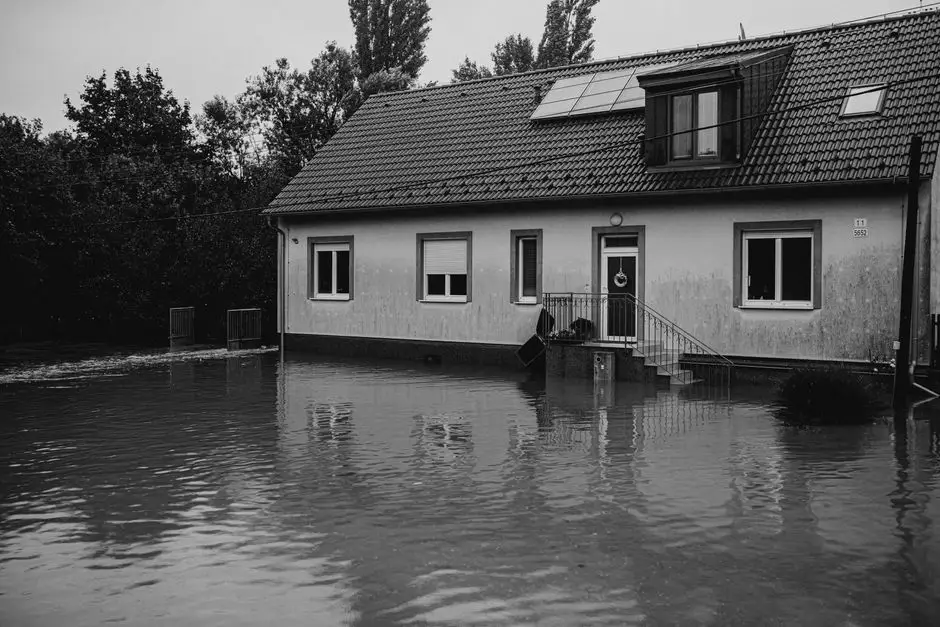
To remove standing water from a basement safely, first cut power to the flooded area at the breaker, then pump the water out in stages using a submersible pump or wet/dry vac, and dry the space within 24 to 48 hours to stop mold. Never wade into water that covers outlets, and never pump a full basement down in one pass - dropping the water level too fast can crack the foundation walls.
How to remove standing water from a basement safely is a process, not a single step: kill the power, protect yourself, extract the water, then dry and disinfect everything the water touched. We do this work every week across Connecticut, and the calls that go worst are almost always the ones where someone skipped the first two steps.
Why Standing Water in a Connecticut Basement Is Dangerous
Standing water in a Connecticut basement is dangerous because it combines three separate hazards at once: electrocution, structural damage, and biological contamination. Any one of them can send you to the hospital or cost you five figures in repairs.
The electrical risk is the one that kills people. A basement floor covered in two inches of water can energize the entire slab if a sump pump, dehumidifier, or freezer is plugged into a live outlet down there. Connecticut homes built before 1970 - which is most of Hartford, Waterbury, and New Britain - often have their only basement outlets on ungrounded circuits. Water plus an ungrounded circuit is a lethal combination.
The biological risk depends on the source. Clean water from a burst supply line is one thing. Water that backed up through a floor drain or came in over a sewage ejector pit is category 3 water - black water - and it carries bacteria, viruses, and parasites. You do not dry that out with a shop vac and a fan. It needs extraction, disposal of porous materials, and disinfection.
Structural damage is the slow one. Water sitting against a poured concrete wall for a week does not just leave a stain. It wicks into the concrete, pushes against the exterior waterproofing, and sets up the freeze-thaw cycle that spalls the wall surface the following winter. We see the results every spring in older Fairfield County homes.
How Long Can Standing Water Sit in a Basement in CT?
Standing water in a CT basement starts growing mold in 24 to 48 hours, and the damage clock is running from the moment the water stops rising. Mold needs three things: moisture, organic material, and time. Your basement provides the first two instantly - drywall paper, wood framing, cardboard boxes, carpet backing.
Here is the practical timeline we work from:
- 0-24 hours: Water wicks into drywall, baseboards, and carpet. No mold yet. Full extraction and drying can usually save everything.
- 24-48 hours: Mold spores germinate. Musty odor appears. Carpet padding is usually a loss.
- 48 hours-1 week: Visible mold growth on drywall and framing. Structural lumber starts to soften. Metal fasteners begin to rust.
- Beyond 1 week: Mold colonies are established and releasing spores into the living space above. Drywall, insulation, and often the bottom plate of the framing have to come out.
That is why we treat every basement flooding water removal call as time-critical, even when the water looks shallow. Two inches of water across a 600-square-foot basement is roughly 750 gallons - that is not a mop job.
Safety First: Before You Touch the Water
Before you touch the water, shut off power to the basement at the main breaker panel and confirm it is off with a non-contact voltage tester. If the panel itself is in the flooded area, do not go near it - call an electrician or your utility first.
Once power is confirmed off, gear up. The minimum for any basement water is:
- Waterproof boots that come up past the water line - not sneakers, not sandals.
- Rubber gloves and eye protection.
- An N95 or P100 respirator if there is any visible mold or a sewage smell.
- A flashlight or headlamp - do not rely on basement lighting.
If the water is more than ankle-deep, or if it smells like sewage, stop. Sewage-contaminated water is a job for trained technicians with proper PPE and disposal procedures. Our team handles Sewage Water Removal in Connecticut with the containment and disinfection that category 3 water requires.
One more check before you start: find the source. If water is still coming in - a running supply line, a failed sump pump, an overflowing washing machine - you are bailing a sinking boat. Shut off the source first. For a broken supply line, that means the main shutoff. For a failed sump, we cover that in our guide to Sump Pump Failure Water Removal in Connecticut.
Step-by-Step: How to Remove Standing Water from a Basement Safely
Safe basement water removal follows a fixed order: stop the source, kill the power, extract the bulk water, remove saturated materials, dry the structure, then disinfect. Skipping the drying or disinfecting steps is how a two-day problem turns into a two-month mold remediation.
Step 1: Stop the Water Source
Close the main shutoff if the source is a supply line. If it is groundwater or storm inflow, there is nothing to shut off - you are managing the water until it stops. In Connecticut, that usually means a Nor'easter or a spring thaw pushing the water table up through the floor.
Step 2: Kill the Power
Main breaker off. Confirm with a tester. Do not skip this because the water looks shallow.
Step 3: Extract the Bulk Water
Use a submersible pump for anything over an inch. A wet/dry vac handles the last half inch and the low spots. Work from the deepest corner toward the drain or the sump pit.
Step 4: Remove Saturated Materials
Carpet and padding come out. So does any drywall that is wet above the baseboard line - cut it 12 inches above the water mark. Insulation that got wet is a loss. Cardboard, paper, and fabric go in the trash.
Step 5: Dry the Structure
Air movers and a commercial dehumidifier. Household fans and a $200 dehumidifier will not dry a wet slab and framing. You want the space down to under 16% moisture content in the wood and under 60% relative humidity in the air. That usually takes 3 to 5 days with professional equipment.
Step 6: Disinfect
Anything the water touched gets treated. For clean-water floods, an antimicrobial spray on the slab and bottom plates is enough. For gray or black water, it is a full disinfection protocol.
How to Pump Standing Water from a Basement
To pump standing water from a basement, use a submersible utility pump rated for at least 1/3 horsepower, discharge it at least 20 feet from the foundation, and pump in stages - no more than 2 to 3 feet of drop per day on a full basement. That last part is the one people get wrong.
Here is why the staging matters. A basement that has been full for days has hydrostatic pressure pushing inward on the walls from saturated soil outside. If you pump it dry in one afternoon, that pressure has nothing balancing it, and the walls can crack or bow. We have seen it happen in Cheshire Village and Middletown after long-duration floods. Two to three feet per day is the safe rate.
Practical setup:
- Set the pump on a concrete paver or brick so it does not clog with silt.
- Run the discharge hose out a window or up the stairs - never into a floor drain, which will just send it back.
- Discharge onto a slope that carries water away from the house, at least 20 feet out.
- Check the pump every 30 minutes. Utility pumps overheat when they run dry.
If the water is deeper than 3 feet or the basement is finished, stop and call us. Emergency standing water extraction CT homeowners can rely on is what we do - and it is far cheaper than replacing a bowed foundation wall.
What Standing Water Removal Costs in Connecticut in 2026
Standing water removal cost Connecticut homeowners pay in 2026 runs from about $500 for a shallow, clean-water extraction in an unfinished basement to $6,000 or more for a sewage-contaminated flood in a finished space. The spread is almost entirely about water category, square footage, and how much material has to be removed.
Typical 2026 pricing in this area:
- Clean water, unfinished basement, under 500 sq ft: $500-$1,200 for extraction and drying.
- Clean water, finished basement: $1,800-$4,000, including carpet and pad removal and structural drying.
- Category 3 (sewage) water: $3,500-$8,000+, including disposal, disinfection, and material replacement.
- Mold remediation add-on: $1,500-$6,000 depending on the area affected.
Most homeowner policies cover sudden and accidental discharge - a burst pipe, a failed water heater - but not long-term seepage or groundwater flooding. That distinction matters in Connecticut, where groundwater flooding after a storm is common and usually not covered. Check your policy before you assume.
Common Mistakes That Make Basement Flooding Worse
The mistakes that make basement flooding worse are almost always about speed and shortcuts - pumping too fast, drying too little, or treating contaminated water like a clean spill. Here are the ones we see most.
- Pumping a full basement dry in one pass. This is the single most expensive mistake. It cracks walls.
- Running a household fan and calling it dried. Surface dry is not dry. The slab and framing hold water for days.
- Leaving wet carpet and padding down. Padding is a sponge. It will grow mold under a carpet that still looks fine.
- Skipping the disinfectant on a sewage backup. The smell goes away; the bacteria do not.
- Waiting for the insurance adjuster before extracting water. Document with photos, then start drying. The adjuster does not need the water to still be there.
- Assuming the sump pump will handle it. A failed or undersized pump is the most common cause of repeated flooding we see.
When to Call a Professional
Call a professional when the water is deeper than ankle-high, when it smells like sewage, when the basement is finished, or when the source is not obvious. Those four conditions cover the vast majority of calls we run.
We handle basement water removal services Connecticut homeowners need with truck-mounted extraction, commercial drying equipment, and moisture meters that tell us when the structure is actually dry - not just when it looks dry. We find the source, extract the water, dry the space, and test it before we leave.
If you are in the Hartford area, our team runs Water Removal in Hartford seven days a week. Along the shoreline, we cover Water Removal in Stamford and the surrounding towns, where storm surge and high water tables drive most of the calls.
Frequently Asked Questions
How to remove standing water from basement safely in Connecticut?
Shut off power at the breaker, confirm it is off, then pump the water out in stages using a submersible pump - no more than 2 to 3 feet of drop per day. Dry the structure within 24 to 48 hours and disinfect everything the water touched.
Who does standing water removal in Connecticut?
Licensed water damage restoration companies handle it. Ct Water Remover Pros provides emergency standing water extraction across Connecticut, including Hartford, Stamford, Waterbury, and New Haven, with same-day response for most calls.
How long can standing water sit in basement CT?
Mold begins growing in 24 to 48 hours. After 48 hours, drywall and framing start to absorb water and mold colonies form. Beyond one week, porous materials usually have to be removed and replaced.
Is standing water in basement dangerous in Connecticut?
Yes. It creates electrocution risk from live circuits, structural damage from hydrostatic pressure, and biological hazards if the water is sewage-contaminated. Never wade into water that covers outlets or has a sewage smell.
Can I just use a shop vac to remove the water?
A wet/dry vac works for the last half inch. For anything deeper than an inch, you need a submersible pump. A shop vac will overheat and burn out long before it clears a flooded basement.
Get Help with Water Removal in Connecticut
Standing water does not wait, and neither should you. Our team is on call across Connecticut for emergency extraction, drying, and disinfection - with upfront pricing before we start.
Call Ct Water Remover Pros at (833) 640-1438 and we will have a crew at your door.