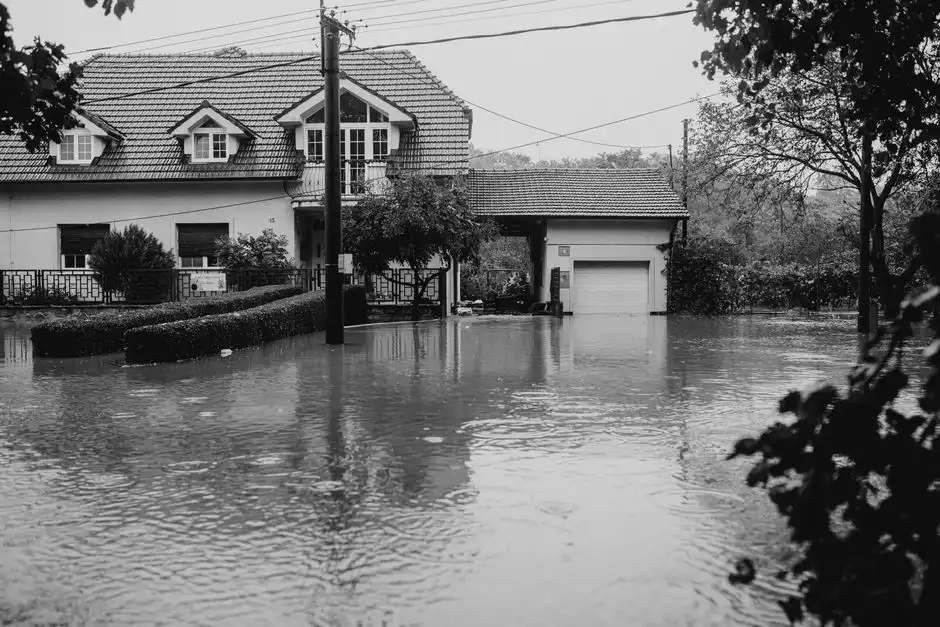
When your street floods in Norwalk, get out of the water, kill the power to any flooded area if you can reach the panel dry, and call for storm water removal before you start moving anything. Storm water that sits longer than 24 to 48 hours turns into a mold and structural problem, and that clock starts the moment the water crosses your threshold.
Norwalk storm water removal is the pumping, extraction, and drying of floodwater that enters a home from street flooding, overwhelmed storm drains, or rising brooks and rivers. This guide covers what to do in the first hour, why Norwalk floods the way it does, what cleanup costs in 2026, and when to stop handling it yourself.
What to do when your street floods in Norwalk Connecticut
What to do when your street floods in Norwalk Connecticut comes down to a short, ordered list, and the order matters more than the speed.
- Get to high ground and stay out of moving water. Six inches of moving water knocks an adult off their feet. Do not wade out to move a car.
- Cut power to flooded rooms only if the panel is dry and reachable. If water is anywhere near the panel, leave it and call an electrician.
- Photograph everything before you touch it. Waterlines on drywall, ruined furniture, the depth on your basement stairs. Your adjuster needs these.
- Call for storm water removal. Extraction equipment pulls water out hours faster than a shop vac, and it starts the drying clock.
- Move what you can to dry ground - documents, electronics, anything on a low shelf - but do not walk through sewage-contaminated water to do it.
If your street is still draining and the water is receding, wait. If it is rising or your basement is filling, call now. We run Storm Water Removal in Connecticut around the clock during Norwalk flood events, and the difference between a two-hour response and a next-morning response is usually the difference between drying a floor and replacing one.
Why Norwalk streets flood so fast
Norwalk floods fast because it sits at the mouth of the Norwalk River, its storm sewer system was sized for a smaller city, and much of its older housing stock drains toward the same low points. Three things stack up at once.
The first is tide. When a heavy rain coincides with a high tide in Long Island Sound, the river cannot empty, and water backs up into the streets that feed it. That is why flooding on Water Street, Ann Street, and the lower Wall Street area can happen on a two-inch rain if the timing is wrong.
The second is impervious surface. Norwalk has added driveways, patios, and roof area for decades. Every square foot of asphalt sends rain into the storm drain instead of into the ground, and the drains on older streets like those off Connecticut Avenue and Westport Avenue fill faster than they can clear.
The third is age. Many of the storm lines under South Norwalk and East Norwalk are clay tile installed mid-century, and root intrusion narrows them to a fraction of their original capacity. A line that used to move 500 gallons a minute might move 150 today.
We see the same pattern in neighboring towns. Homeowners dealing with Water Removal in Fairfield describe identical tide-and-drain problems along the Saugatuck, and the fix is the same: get the water out of the house, then address the grading and drainage that let it in.
How storm water gets into your Norwalk home
Storm water almost never enters a Norwalk home through the front door. It comes in through five predictable paths, and knowing which one you have tells you how big the job is.
- Basement floor drains and sump pits. When the storm sewer surcharges, water pushes back up the drain tile and into the pit faster than the pump can move it.
- Window wells and bulkhead doors. A clogged well drain turns a window well into a bucket, and the water finds the sill.
- Foundation cracks and cold joints. Hydrostatic pressure from saturated soil pushes water through hairline cracks that stay dry eleven months a year.
- Failed sump pumps. Power outages during storms are the number one cause. A pump with no battery backup is a pump that quits exactly when you need it.
- Sewer backups. In combined systems, storm water and sewage share a pipe. When it surcharges, what comes up is not clean.
If your pump ran and lost, that is a Sump Pump Failure Water Removal in Connecticut job, and it needs to start with extraction, not with a trip to the hardware store. If what came up the drain smells like sewage, stop and call - that is a contaminated-water situation and it changes the entire scope.
Norwalk storm water removal: what the process actually looks like
Norwalk storm water removal runs in four stages, and skipping any one of them is why so many flooded basements smell musty three weeks later.
Stage 1: Water extraction
We start with truck-mounted and portable extraction units that pull standing water out of carpet, pad, and hard flooring. A basement with four inches of water across 800 square feet holds roughly 2,000 gallons. A shop vac moves about 10 gallons a minute on a good day. Our equipment moves it in a fraction of that time, and it pulls water out of the carpet rather than just off the top of it.
Stage 2: Contamination assessment
Storm water that came off a street is Category 2 at best and Category 3 if it mixed with sewage. That determines what gets dried and what gets cut out. Carpet pad that soaked up street water gets removed, every time. So does any porous material that sat in it more than a day.
Stage 3: Structural drying
We set commercial dehumidifiers and air movers sized to the cubic footage of the space, not to the square footage. A finished 1,000-square-foot basement typically needs three to four air movers and one large LGR dehumidifier, running 3 to 5 days. We check moisture readings in the drywall, the sill plate, and the subfloor daily and adjust.
Stage 4: Documentation and clearance
We log moisture readings from day one to the final dry-down. That log is what your insurance adjuster wants, and it is what proves the structure was dry before the walls went back up.
If the water came in through the roof during the same storm, that is a separate scope and a separate set of equipment - Roof Leak Water Removal in Connecticut involves ceiling cavities and insulation that storm water on the floor does not touch.
What storm water cleanup costs in Norwalk in 2026
Storm water cleanup in Norwalk in 2026 runs $1,200 to $3,500 for a typical flooded basement, and $4,000 to $12,000 or more when finished space, sewage contamination, or a full tear-out is involved. Those are real ranges, not estimates pulled from a national average.
What moves the number:
- Volume and area. A 400-square-foot utility basement with two inches of water is a half-day job. A finished 1,200-square-foot lower level with four inches is three to five days of drying plus a rebuild.
- Water category. Clean rainwater is one price. Sewage-contaminated water requires removal of porous materials, antimicrobial treatment, and disposal - usually 40 to 60 percent more.
- Access. A basement with a straight exterior bulkhead is faster to rig than one you reach through a finished interior stairwell.
- Contents. Moving, drying, and storing furniture and stored items is billed separately from structural drying.
We give you the price before we start, and it does not change because the job took longer than we thought. If you are comparing quotes, compare the drying plan and the daily moisture log, not just the bottom line.
Does insurance cover storm water removal in Norwalk?
Standard homeowners insurance in Connecticut covers storm water damage only when the water entered through a covered opening - a broken window, a roof breach, a failed sump pump with an endorsement - and almost never covers water that rose from the ground. That distinction is the single biggest source of denied claims after a Norwalk street flood.
Here is how it usually breaks down:
- Covered: Wind-driven rain through a damaged roof or window, burst pipes during the storm, and sump pump overflow if you carry the water backup endorsement.
- Not covered: Surface water, street flooding, and river or tidal overflow. Those require a separate NFIP flood policy or private flood coverage.
- Gray area: Water that came in through a foundation crack during a storm. Adjusters read this differently, and documentation decides it.
If you are in a Norwalk flood zone and do not carry flood insurance, get a quote before the next storm season. NFIP policies have a 30-day waiting period, so a policy bought the day before a nor'easter covers nothing.
We document every job the way an adjuster wants it - photos, moisture logs, category assessment, and an itemized scope. That paperwork is often the difference between a paid claim and a fight.
How to prevent street flooding damage in Norwalk
Preventing street flooding damage in Norwalk is mostly about giving water somewhere to go that is not your basement. None of it is expensive if you do it before the storm.
- Add a battery backup sump pump. A primary pump plus a battery backup runs $600 to $1,200 installed. It is the highest-return dollar you will spend on flood prevention.
- Test your pump twice a year. Pour a bucket of water into the pit in April and again in October. If it does not kick on and clear the pit in under 30 seconds, replace it.
- Clean your gutters and extend your downspouts. Downspouts that dump within three feet of the foundation put that water straight into your drain tile. Extend them six to ten feet out.
- Regrade the soil around the foundation. It should slope away at roughly one inch per foot for the first six feet.
- Clear window well drains and check the covers. A blocked well drain fills the well in minutes.
- Install a backwater valve on the sewer line if your home has a combined system. It is a few hundred dollars and it stops sewage from coming up your floor drain.
If you have already had two or more floods, the problem is drainage, not luck. That is when an interior drain tile system and a properly sized pit make sense - usually $4,000 to $9,000, and it ends the cycle.
Common mistakes after a Norwalk street flood
The mistakes that cost Norwalk homeowners the most are almost always made in the first 24 hours, and they are all avoidable.
- Waiting for the water to go down on its own. It will, in a day or two. By then the drywall wicking is at 18 inches and the mold clock has started.
- Running a shop vac and a box fan and calling it done. Fans move air. They do not remove moisture from the air, so the water you cannot see stays in the framing.
- Throwing out the wet carpet before photographing it. No photos, no claim.
- Walking through street water in bare feet or open shoes. Street floodwater carries gasoline, fertilizer, animal waste, and whatever the storm drain backed up. Tetanus is a real risk.
- Turning the heat up to dry it faster. Heat without dehumidification raises the humidity and feeds mold.
- Rebuilding before the structure is verified dry. If you close the walls at 20 percent moisture, you will be opening them again in six months.
One more: do not assume the smell is temporary. A musty odor three days after a flood means active microbial growth, and it does not go away on its own.
When to call a professional
Call a professional when the water is more than an inch deep, when it came from a street or a drain rather than a supply line, when it reached drywall or insulation, or when it has been sitting more than 24 hours. Those four conditions cover about 90 percent of the calls we run.
You can handle a small, clean supply-line spill with towels and a fan. You cannot handle 2,000 gallons of street water in a finished basement with a wet-dry vac, and trying usually makes the rebuild more expensive.
Our team handles the extraction, the category assessment, the drying, and the documentation in one visit. We serve Norwalk and the surrounding towns, and we carry the equipment to dry a full lower level, not just a utility room.
Frequently Asked Questions
What should I do first when my street floods in Norwalk Connecticut?
Get out of the water and cut power to flooded rooms only if the panel is dry and reachable. Then photograph the damage and call for storm water removal. Do not wade through moving water, and do not wait for it to recede on its own - the mold clock starts at 24 to 48 hours.
Who does storm water removal in Norwalk CT?
Ct Water Remover Pros handles storm water extraction, structural drying, and documentation for Norwalk homeowners. We run emergency calls during flood events and handle everything from a wet utility basement to a fully finished lower level. Call (833) 640-1438.
How much does storm water cleanup cost in Norwalk?
Typical 2026 pricing in Norwalk runs $1,200 to $3,500 for a flooded basement, and $4,000 to $12,000 when finished space or sewage contamination is involved. Sewage-contaminated water usually adds 40 to 60 percent because porous materials have to be removed and disposed of.
Does insurance cover storm water removal in Norwalk?
Only if the water entered through a covered opening such as a roof breach or a broken window, or if you carry a sump pump water backup endorsement. Surface water and street flooding require a separate flood policy. NFIP policies have a 30-day waiting period.
How long does it take to dry a flooded basement?
A typical Norwalk basement takes 3 to 5 days of continuous drying with commercial dehumidifiers and air movers. Finished space with wet drywall and insulation can run 5 to 7 days. We check moisture readings daily and do not stop until the framing reads dry.
Get help with Water Removal in Norwalk
If your street is flooding right now, every hour the water sits costs you more in the rebuild. We extract, dry, and document the job so your claim goes through and your basement goes back to normal.
Call Ct Water Remover Pros at (833) 640-1438 for emergency storm water removal in Norwalk and across Connecticut.